

Updated November 2026. Chemistry, food figures and UK label wording checked on 6 November 2026. Verve makes PQQ 40mg Capsules, described near the end.
PQQ, short for pyrroloquinoline quinone, is a quinone: a ring-shaped molecule with the formula C14H6N2O8, first identified in 1979 as a cofactor of bacterial enzymes. Bacteria make it; the studies we read say human and animal cells do not. Foods hold trace amounts: a 1995 study measured 61 nanograms per gram in natto (fermented soybeans) and 27 to 34ng/g in kiwi fruit, green peppers and parsley. UK labels state it as PQQ or as PQQ disodium salt, which is about 88% PQQ by weight (our calculation), at 10mg to 40mg a day. Check with your doctor first if you are pregnant, breastfeeding, taking medication or have a medical condition; labels say not for children. There are no authorised health claims for PQQ in Great Britain, so this guide describes the compound and the label, not effects.
The short answer
- PQQ is a quinone, C14H6N2O8, made by bacteria, where it is an enzyme cofactor.
- Foods hold nanograms, not milligrams. Natto was highest in the 1995 study at 61ng/g, about 6μg per 100g.
- Two label names: "PQQ" or "PQQ disodium salt". 20mg of the salt holds about 17.7mg of PQQ (our calculation).
- Read per capsule against per serving. UK labels run from 10mg to 40mg a day, in one or two capsules.
- No authorised GB health claims exist for PQQ. A label can tell you dose, form, purity and storage, nothing else.
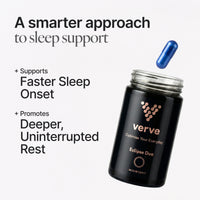
- From Verve: Verve PQQ 40mg, 40mg of PQQ per two capsules, one ingredient, every batch independently lab-tested for purity, with the certificate for your batch on request, and made in the UK.
What PQQ is
The ChEBI chemical database (entry 18315) gives PQQ's formula as C14H6N2O8 and its average mass as 330.21. Its full name, 4,5-dioxo-4,5-dihydro-1H-pyrrolo[2,3-f]quinoline-2,7,9-tricarboxylic acid, describes three joined rings with two oxygen atoms on neighbouring carbons (which makes it an ortho-quinone) and three carboxylic acid groups.
A 1995 paper in the Biochemical Journal (Kumazawa and colleagues) gives the background. PQQ was identified in 1979 as a cofactor (a helper molecule an enzyme needs) of several bacterial dehydrogenases, enzymes that remove hydrogen from other molecules. Some microorganisms make it and need it to grow. The authors found no reports of eukaryotic cells (the cells of animals, plants and fungi) making it. A 2018 paper in PLoS ONE (Kato and colleagues) states that eukaryotic cells cannot make PQQ. That is the chemistry, and this guide stops there.
Which foods contain PQQ
Kumazawa's team found PQQ in all 26 foods they tested, at 3.65 to 61.0 nanograms per gram (ng/g). A nanogram is one thousandth of a microgram. The conversion to micrograms per 100g is ours.
| Food | Reported (1995) | Our conversion |
|---|---|---|
| Fermented soybeans (natto) | 61.0ng/g | About 6.1μg per 100g |
| Parsley | 34.2ng/g | About 3.4μg per 100g |
| Green pepper | 28.2ng/g | About 2.8μg per 100g |
| Kiwi fruit | 27.4ng/g | About 2.7μg per 100g |
| Tofu | 24.4ng/g | About 2.4μg per 100g |
| Spinach | 21.9ng/g | About 2.2μg per 100g |
The 2018 paper notes that a later method (Noji and colleagues, 2007) found 0.19 to 7.02ng/g in natto and green tea, well below the 1995 figures. The amounts are tiny: on the highest 1995 figure, the PQQ in one 20mg capsule would take about 330kg of natto (our calculation).
How supplement PQQ is made
Mitsubishi Gas Chemical, a Japanese supplier, says it makes PQQ "by fermentation of bacteria". Its ingredient is sold as BioPQQ in North America and Asia and as MGCPQQ in Europe, the same ingredient under two names according to a 2019 trade report. The 2018 paper names BioPQQ as PQQ disodium salt. We did not find a supplier or production method on the Charava, The Finchley Clinic, Hirundo or Verve pages.
PQQ or PQQ disodium salt: what the weight means
In PQQ disodium salt, two of PQQ's three acid hydrogens are replaced by sodium. Fisher Scientific lists the salt as C14H4N2Na2O8, molecular weight 374.17. PQQ is 330.21, so PQQ is about 88% of the salt by weight. This is our calculation from the two formulas, for the salt with no water in it.
| What the label says | PQQ it contains (our calculation) |
|---|---|
| 10mg PQQ disodium salt | About 8.8mg |
| 20mg PQQ disodium salt | About 17.7mg |
| 40mg PQQ disodium salt | About 35.3mg |
| 20mg PQQ, from PQQ disodium salt | 20mg, from about 22.7mg of the salt |
Therascience's PHYSIOMANCE PQQ states "20 mg of disodium salt of pyrroloquinoline quinone (PQQ MGCPQQ®)", about 17.7mg of PQQ on our calculation. Hirundo's 10mg capsule lists "pyrroloquinoline quinone disodium" without saying whether 10mg is the salt or the PQQ. Charava and The Finchley Clinic name no salt. The rule: "PQQ 20mg (as disodium salt)" should mean 20mg of PQQ; "PQQ disodium salt 20mg" means 20mg of salt, so multiply by 0.88. If the label does not say, ask the brand.
Per capsule or per serving
Read the serving line first. Most labels we read are one capsule a day, so capsule and serving are the same figure. Verve's is two 20mg capsules a day, so "20mg" and "40mg" describe the same product. The daily amounts we read are 10mg (Hirundo), 20mg (Charava and The Finchley Clinic), 20mg of the salt (Therascience) and 40mg (Verve). These are label statements, not recommendations. PQQ has no NRV, so its NRV column shows a dash (see what NRV means on a label). Some pages call PQQ "vitamin B14"; it is not one of the 13 vitamins with an NRV on UK labels.
Purity, certificates and storage
A certificate of analysis (CoA) is the laboratory report for one batch. Check:
- The batch number matches your pack.
- The assay names the compound. "PQQ disodium salt 99%" is not "PQQ 99%": 99% pure salt is about 87% PQQ (our calculation).
- Heavy metals: lead, arsenic, cadmium and mercury, each with a result and a limit.
- Microbiology: total plate count, yeast and mould, E. coli and Salmonella.
Charava states "Third-Party Tested for Purity" without naming a laboratory, Therascience "99% purified" without a certificate, and The Finchley Clinic and Hirundo no testing. A purity figure without a certificate behind it is a claim, not a result. On storage, Hirundo's label says 6 to 25°C, protected from light, and Therascience's says a cool, dry and dark place. The Charava, The Finchley Clinic and Verve pages give no storage line.
Who should check with a doctor first
Verve's product page says: consult your doctor before use if you are pregnant, breastfeeding, taking medication or have a medical condition. Not suitable for children. Keep out of reach of children. Do not exceed the recommended daily dose. Charava's adds trying to conceive and says not for anyone under 18. Therascience's says adults only.
What does PQQ do?
There are no authorised health claims for PQQ on the Great Britain nutrition and health claims register. No UK brand, including Verve, may tell you what it does for your health, and this guide does not. Anything more on a product page is the brand's wording, not an authorised claim.
Verve PQQ 40mg Capsules
Verve's label table is one line: Pyrroloquinoline Quinone (PQQ), 40mg per serving, NRV not established. The label and description state 40mg of pyrroloquinoline quinone and name no salt form. Take two capsules (20mg each), once a day, with water: 40mg in total. Do not exceed the recommended daily dose. 60 capsules, 30 days. A single ingredient in a plant cellulose shell. Every batch is independently lab-tested for purity; the certificate of analysis for your batch is available on request from hello@vavaverve.com. Full details are on the Verve PQQ 40mg Capsules page. UK PQQ labels are compared in best PQQ supplement UK, and Verve's other single-ingredient capsules are in its longevity range.
Food supplements should not be used as a substitute for a varied, balanced diet and a healthy lifestyle. Do not exceed the recommended daily dose.
PQQ: your questions
What is PQQ?
Pyrroloquinoline quinone, a quinone with the formula C14H6N2O8. Bacteria make it, and it was identified in 1979 as a cofactor of some bacterial enzymes.
Which foods contain PQQ?
All 26 foods in a 1995 study did, at 3.65 to 61.0ng/g. Natto was highest, about 6μg per 100g, then parsley, green pepper and kiwi fruit at 27 to 34ng/g. A later method found lower levels.
Is PQQ disodium salt the same as PQQ?
It is PQQ with two hydrogen atoms replaced by sodium, about 88% PQQ by weight (our calculation). 20mg of the salt holds about 17.7mg of PQQ. BioPQQ and MGCPQQ are branded PQQ disodium salt.
How much PQQ is in a UK supplement?
The UK labels we read state 10mg to 40mg a day. Verve's is 40mg, as two 20mg capsules. There is no NRV for PQQ.
What does PQQ do?
No health claim for PQQ is authorised in Great Britain, so no UK brand may say what it does, and this guide does not. It is a quinone made by bacteria, found in foods in trace amounts.
How we checked
Chemistry: ChEBI entry 18315 (ebi.ac.uk); Fisher Scientific's listing of PQQ disodium salt (CAS 122628-50-6). Salt and food conversions are our calculation. Food figures: Kumazawa T and colleagues, Biochemical Journal 1995;307:331-333. Later figures: Kato C and colleagues, PLoS ONE 2018;13(12):e0209700, which reports Noji and colleagues, Journal of Agricultural and Food Chemistry 2007;55:7258-7263 (we did not read the 2007 paper itself). Manufacturing: Mitsubishi Gas Chemical's BioPQQ listing on ingredientsnetwork.com; dairyreporter.com, 20 June 2019. NRVs: Annex XIII of retained Regulation (EU) No 1169/2011, legislation.gov.uk. We found no NHS page on PQQ. Labels: Verve's product page and product data; charava.co.uk; therascience.com (UK site); Hirundo PQQ on eliveragroup.co.uk; The Finchley Clinic PQQ via the UK retailer Raw Living (rawliving.co.uk). No prices are compared. All read on 6 November 2026. Verve makes PQQ 40mg Capsules.