

Updated November 2026. Chemistry, sources and UK label wording checked on 6 November 2026. Verve makes Astaxanthin 18mg Capsules, described near the end.
Astaxanthin is a red carotenoid pigment, one of the xanthophylls, with the formula C40H52O4. The richest natural source is the freshwater microalga Haematococcus pluvialis, which can build it up to 3.8% of its dry weight. It also colours krill, shrimp, salmon and trout; salmon, trout and shrimp cannot make it themselves and get it through what they eat. UK supplement labels state it as milligrams of astaxanthin, or as the weight of an extract or powder with a percentage: 360mg of a 5% powder gives 18mg. Labelled doses on the UK products we read run from 4mg to 18mg a day. There are no authorised health claims for astaxanthin in Great Britain, so this guide describes the pigment and the label, not effects. Check with your doctor first if you are pregnant, breastfeeding, taking medication or have a medical condition. Not suitable for children.
The short answer
- A red pigment: a carotenoid from the xanthophyll group, formula C40H52O4.
- Sources: the alga Haematococcus pluvialis, some yeasts and bacteria, and krill, shrimp and fish further up the food chain.
- Natural or synthetic: the label should name the organism. Synthetic astaxanthin goes mainly into fish feed.
- Weight times percentage gives the astaxanthin: 40mg of a 10% oleoresin is 4mg.
- No authorised GB health claims: a label can tell you dose, source, form and storage, nothing more.
- From Verve: Verve Astaxanthin 18mg, 18mg of astaxanthin per capsule from microalgae, one capsule a day, every batch independently lab-tested for purity, with the certificate for your batch on request, and made in the UK.
What astaxanthin is
A 2014 review in Marine Drugs (Ambati and colleagues) describes astaxanthin as a xanthophyll carotenoid: a xanthophyll because it contains oxygen as well as carbon and hydrogen. Its chemical name is 3,3'-dihydroxy-β,β-carotene-4,4'-dione and its formula is C40H52O4. The RCSB Protein Data Bank gives its molecular weight as 596.8. As the name says, it carries a hydroxyl group and a keto group on the ring at each end, and the review says the chain of conjugated double bonds between them makes it red. In nature it is usually bound to fatty acids as mono- or diesters (Stachowiak and Szulc, Molecules, 2021). That is the chemistry, and this guide stops there.
Where astaxanthin comes from
Haematococcus pluvialis is a green freshwater microalga that builds up astaxanthin under stress: strong light, salt, heat or a shortage of nitrogen. The Ambati review reports up to 3.8% of its dry weight, the 2021 review up to 4%. The yeast Xanthophyllomyces dendrorhous (also called Phaffia rhodozyma) and the bacterium Paracoccus carotinifaciens make smaller amounts.
The 2021 review says salmon, trout and shrimp do not make astaxanthin from scratch, so their colour depends on their diet. In raw shrimp and lobster shells it is bound to a protein, crustacyanin, and looks blue; cooking breaks down the protein and frees the red.
| Fish | Reported by the Ambati review | Per 100g (our conversion) |
|---|---|---|
| Sockeye salmon | 26 to 38mg per kg of flesh | 2.6 to 3.8mg |
| Farmed Atlantic salmon | 6 to 8mg per kg of flesh | 0.6 to 0.8mg |
Farmed fish get theirs from feed. The Ambati review says astaxanthin is used as a pigment in salmon, trout and shrimp feed, and the 2021 review says synthetic astaxanthin has over 95% of the feed market.
Natural and synthetic astaxanthin
Commercial astaxanthin comes from Haematococcus algae, Phaffia yeast and chemical synthesis, the Ambati review says, and the difference shows in the molecule. Haematococcus makes the (3S,3'S) form, mostly as esters; the yeast makes (3R,3'R). Synthetic astaxanthin is a mix of (3S,3'S), (3R,3'S) and (3R,3'R) in a ratio of 1:2:1, according to the 2021 review.
A label shows the source by naming the organism. Igennus, Lamberts, Time Health and Viridian all name Haematococcus pluvialis, and Lamberts adds "the natural 3S - 3'S form". Verve says "sourced from microalgae" without the species. Myvitamins gives no source. None of the pages we read says its astaxanthin is synthetic. If a label names no organism, ask the brand.
How labels state the amount
Astaxanthin reaches brands as an oily extract (oleoresin) or a powder at a set strength; the 2021 review lists oil preparations at 2.5% to 20%. So the weight in the capsule and the astaxanthin in it are two different numbers.
- Astaxanthin only. Myvitamins: "7mg of astaxanthin per capsule".
- Extract weight with a percentage. Igennus lists 40mg of oleoresin "(10%)", "of which astaxanthin 4mg". Verve lists 360mg of 5% astaxanthin powder giving 18mg. Multiply: 40mg x 10% = 4mg; 360mg x 5% = 18mg.
- Extract weight only. Viridian lists "Astaxanthin extract (Haematococcus pluvialis) 4mg". The page does not say how much astaxanthin that extract holds, so it is not the same as 4mg of astaxanthin.
- Per serving, not per capsule. Lamberts: "Two capsules deliver 8mg", so 4mg a capsule and 15 days in a pot of 30.
The labelled daily amounts we read: 4mg (Igennus, one softgel, two allowed for adults), 7mg (Myvitamins), 8mg (Lamberts), 12mg (Time Health) and 18mg (Verve). These are label statements, not recommendations. There is no reference intake for astaxanthin, so the NRV column shows a dash (see what NRV means on a label).
Softgels in oil, or powder in a capsule
Most of the products we read are oil-filled, so the label lists a carrier oil and a shell. Igennus uses extra-virgin olive oil in a shell of glycerol, modified pea starch and carrageenan. Lamberts uses sunflower seed oil and adds 24mg of vitamin E per two capsules. Myvitamins uses sunflower oil and beeswax in a beef gelatine shell, so it is not for vegetarians. Time Health puts olive oil in a hypromellose (HPMC) capsule.
A powder capsule lists less. Verve's holds 360mg of 5% powder in plant cellulose; Viridian's holds extract in a marigold flower base. The percentage also tells you how much of a powder is not astaxanthin: in a 5% powder, 95% is something else, and the label should say what. Check the shell, the oil and any added vitamins, which add to what you get from other supplements.
Purity and certificates of analysis
For astaxanthin, purity usually means strength: a 5% powder is meant to be 5% astaxanthin, not 99%. A certificate of analysis (CoA) is the laboratory report for one batch. Check the batch number against your pot; the assay, giving total astaxanthin as a percentage of the oil or powder, at or above the label figure; the source organism; heavy metals (lead, arsenic, cadmium, mercury); and microbiology (total plate count, yeasts and moulds, E. coli, Salmonella). Igennus says it tests "for pesticides, herbicides, heavy metals and environmental contaminants". None of the pages we read links a certificate. A strength figure without a certificate behind it is a claim, not a result.
Storage and light
The 2021 review says heat, light and oxygen break astaxanthin down. In one study it describes, astaxanthin in a drink kept at 30°C in the light had gone within 7 days, while cold, dark samples lost about 27% in the first week, then held steady to day 91. That was a drink, not a capsule, but it shows why storage lines matter. Lamberts says "stored in a cool dry place and protected from light"; Igennus and Myvitamins say away from sunlight; Time Health says use within 6 months of opening. Verve's page has no storage line. Keep the pot closed, out of the sun and away from heat.
Who should check with a doctor first
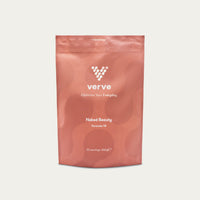
Verve's product page says: consult your doctor before use if you are pregnant, breastfeeding, taking medication or have a medical condition. Not suitable for children. Lamberts says do not take if pregnant or breastfeeding, and not under 14. Igennus says not under 14, and not on the same day as other supplements containing astaxanthin esters. Astaxanthin also turns up in some krill oil, omega-3 and collagen products, including Verve's Naked Beauty Collagen, so read every label before adding another.
What does astaxanthin do?
There are no authorised health claims for astaxanthin on the Great Britain nutrition and health claims register. No UK brand, Verve included, may tell you what it does for your health, and this guide does not. It is a red carotenoid pigment, made by an alga and some yeasts and bacteria, found in krill, shrimp and fish, and sold at 4mg to 18mg a day on UK labels. Anything more on a product page is the brand's wording, not an authorised claim.
Verve Astaxanthin 18mg Capsules
Verve's label table is one line: astaxanthin, 18mg per serving, NRV not established. The page says the 18mg comes from 360mg of 5% astaxanthin powder, sourced from microalgae, and calls it a "single ingredient plus a plant cellulose shell". One capsule a day with water; 30 capsules. Verve lists it as gluten free, dairy free, soy free, vegetarian and vegan. Every batch is independently tested for purity, and the certificate of analysis for your batch is available on request from hello@vavaverve.com. The page does not state the species of alga, what makes up the other 95% of the powder (342mg), or a storage line. Not suitable for children; check with your doctor first if you are pregnant, breastfeeding, taking medication or have a medical condition. The full label is on the Astaxanthin 18mg Capsules page. UK labels are compared in best astaxanthin supplement UK, and Verve's other single-ingredient capsules are in its longevity range.
Food supplements should not be used as a substitute for a varied, balanced diet and a healthy lifestyle. Do not exceed the recommended daily dose.
Astaxanthin: your questions
What is the difference between natural and synthetic astaxanthin?
Astaxanthin from Haematococcus pluvialis is the (3S,3'S) form, mostly bound to fatty acids as esters. Synthetic astaxanthin is a 1:2:1 mix of three forms and has over 95% of the fish feed market. A supplement label shows the source by naming the organism.
How much astaxanthin is in salmon?
The 2014 Marine Drugs review reports 26 to 38mg per kg of flesh in sockeye salmon and 6 to 8mg per kg in farmed Atlantic salmon: about 2.6 to 3.8mg and 0.6 to 0.8mg per 100g, on our conversion.
How much astaxanthin is in a UK supplement?
The labels we read state 4mg to 18mg a day. Check whether the figure is astaxanthin or extract weight: 40mg of a 10% oleoresin is 4mg of astaxanthin, and 360mg of a 5% powder is 18mg.
What does astaxanthin do?
No health claim for astaxanthin is authorised in Great Britain, so no UK brand may say what it does, and this guide does not. It is a red carotenoid pigment that colours salmon, shrimp and krill.
How we checked
Chemistry: Ambati RR, Phang SM, Ravi S, Aswathanarayana RG, "Astaxanthin: sources, extraction, stability, biological activities and its commercial applications - a review", Marine Drugs 2014;12(1):128-152; RCSB Protein Data Bank ligand AXT for formula and weight (PubChem would not load for our tools). Sources, fish figures, synthetic forms and stability: the Ambati review and Stachowiak B, Szulc P, "Astaxanthin for the food industry", Molecules 2021;26(9):2666, both on mdpi.com. Per 100g conversions and extract calculations are ours. We found no NHS page on astaxanthin. Labels: Verve's product page and product data, igennus.com, lambertshealthcare.co.uk, viridian-nutrition.com, timehealth.co.uk and myvitamins.com. No prices are compared and no brand's claims are repeated. All read on 6 November 2026. Verve makes Astaxanthin 18mg Capsules.