




Updated November 2026. NHS guidance, UK labelling rules and Pure Hydra label figures checked on 6 November 2026. Verve makes Pure Hydra, which is mentioned near the end.
The best electrolytes for running are the ones whose label you can read and add up. Electrolytes are minerals in body fluids, such as sodium, potassium, chloride, magnesium and calcium. Sweat carries more sodium and chloride than any other electrolyte, and the amount varies widely between people, so there is no UK figure for runners. The NHS sets a ceiling instead: no more than 6g of salt a day for adults, which is 2.4g of sodium. A 500mg sodium stick is 1.25g of salt, so count it with your food. If you are on a low-sodium diet or blood-pressure medication, or have a kidney condition, ask your GP first.
The short answer
- Sodium first. NHS limit for adults: 6g of salt (2.4g of sodium) a day. Salt is sodium x 2.5.
- No UK figure for runners. Sweat sodium runs from about 10 to 90mmol per litre between people. Ask a sports dietitian for yours.
- Mineral claims need 15% NRV a serving: 56.25mg of magnesium, 300mg of potassium.
- Sports-drink claims need sugar: 80 to 350kcal per litre from carbohydrate. Near-zero-sugar sticks do not qualify.
- Check the water. The same stick in 250ml or 500ml gives a different strength.
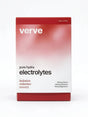
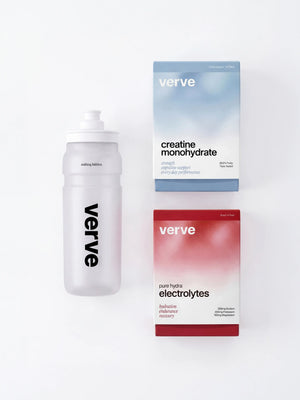
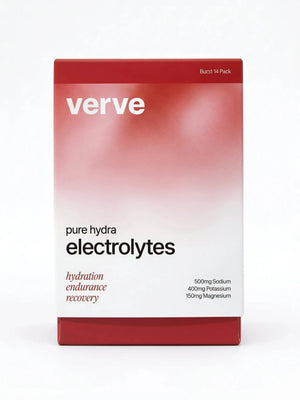
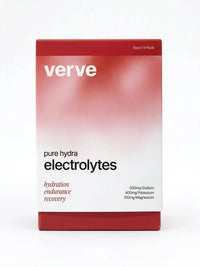
- From Verve: Verve Pure Hydra, 500mg sodium, 400mg potassium and 150mg magnesium per stick, with 0.2g of sugar.
What electrolytes are
The US National Institutes of Health (NIDDK) defines electrolytes as minerals in body fluids, including sodium, potassium, magnesium and chloride. A Wirral University Teaching Hospital NHS glossary names calcium, sodium and potassium.
| Electrolyte | NRV on UK labels | NHS daily amount, adults | NHS upper guide |
|---|---|---|---|
| Sodium | None (salt reference intake 6g) | Not given | No more than 6g of salt (2.4g sodium) a day |
| Chloride | 800mg | Counted within salt | Counted within salt |
| Potassium | 2,000mg | 3,500mg | 3,700mg or less a day from supplements |
| Magnesium | 375mg | 300mg (men), 270mg (women) | 400mg or less a day from supplements |
| Calcium | 800mg | 700mg | 1,500mg or less a day |
The NHS says amounts within the upper guides are unlikely to cause harm. More on what NRV means on a label.
What sweat contains
A 2019 review by Baker in the journal Temperature says sweat is mostly water and sodium chloride, with sodium and chloride at the highest concentrations. Approximate ranges:
| Electrolyte | mmol per litre of sweat | mg per litre (our maths) |
|---|---|---|
| Sodium | 10 to 90 | About 230 to 2,070 |
| Chloride | 10 to 90 | About 355 to 3,190 |
| Potassium | 2 to 8 | About 80 to 310 |
| Calcium | 0.2 to 2.0 | About 8 to 80 |
| Magnesium | 0.02 to 0.40 | About 0.5 to 10 |
These are not reference ranges. Baker's 2017 review in Sports Medicine found that sweating rate and sweat sodium vary between people and within the same person, so two runners on one route can lose very different amounts of sodium.
Sodium against the NHS salt limit
UK labelling law defines salt as sodium x 2.5. The NHS says people in the UK eat about 8g of salt a day on average.
| Sodium | Salt | Share of the NHS 6g |
|---|---|---|
| 500mg | 1.25g | About 21% |
| 1,000mg | 2.5g | About 42% |
| Two 1,000mg sticks | 5g | About 83% |
Electrolyte sodium adds to the salt in your food. The NHS pages we read give no extra figure for exercise.
What an electrolyte label can claim
Only GB-register claims may be used, word for word. A single-serving stick must give at least 15% of the NRV: 56.25mg of magnesium or 300mg of potassium. Authorised claims include:
- Magnesium contributes to electrolyte balance.
- Magnesium contributes to normal muscle function.
- Potassium contributes to normal muscle function.
- Potassium contributes to normal functioning of the nervous system.
All ten magnesium claims are in our magnesium citrate guide. Sodium has no claim of its own, and chloride's one claim cannot be used for chloride from sodium chloride.
The two sports-drink claims
The GB register has two claims for carbohydrate-electrolyte solutions, and they come with strict conditions.
To carry either, a drink needs 80 to 350kcal per litre from carbohydrates (about 20g to 88g, our maths), with at least 75% of the energy from high-glycaemic carbohydrates such as glucose, glucose polymers and sucrose. It also needs 20 to 50mmol of sodium per litre (460mg to 1,150mg) and an osmolality of 200 to 330mOsm per kg of water. So these claims belong to sugar-based drinks. Near-zero-sugar sticks do not meet the carbohydrate condition, so the claims do not apply to them. Pure Hydra has 0.3g of carbohydrate a stick, under 5kcal per litre even in 250ml.
How to read an electrolyte label
- Sodium per serving, in mg. Citrate, chloride or sea salt, the mg is what counts. Fizzing tablets may add sodium bicarbonate.
- Potassium and magnesium, with %NRV. Note the magnesium form (citrate, bisglycinate, malate, oxide) and add magnesium from other supplements against the NHS 400mg guide.
- Sugar. Sugar-free sticks list 0g or a fraction of a gram.
- Sweetener, by name: steviol glycosides (from stevia), sucralose or acesulfame K. Some unflavoured products have none.
- The water. 500mg of sodium is 2,000mg per litre in 250ml and 1,000mg in 500ml.
- Testing, if you race under anti-doping rules. Look for a named programme such as Informed Sport.
These rules applied to named products: best electrolytes UK, sugar-free electrolyte powders and LMNT alternatives UK.
When to check with a GP first
- Low-sodium diet or blood-pressure medication. Check with your doctor before using any electrolyte product regularly.
- Kidney conditions. The NHS says older people's kidneys may be less able to remove potassium, and that older people should not take potassium supplements unless advised to by a doctor. The US Office of Dietary Supplements says the risk of too much magnesium rises when the kidneys do not work normally.
- Pregnancy, medication or a medical condition. Check with your doctor first.
Pure Hydra: what is on the label
Pure Hydra Electrolytes is Verve's electrolyte stick. Per 6.7g stick:
| Nutrient (form on the label) | Per stick | NRV |
|---|---|---|
| Sodium (as citrate) | 500mg | - |
| Chloride (as sodium chloride) | 100mg | 13% |
| Potassium (as citrate) | 400mg | 20% |
| Magnesium (as citrate, bisglycinate) | 150mg | 40% |
| Vitamin C | 100mg | 125% |
| Sugars | 0.2g | - |
| Energy | 12kcal | - |
| Salt | 1.25g | - |
At 40% NRV for magnesium and 20% for potassium, it qualifies for authorised claims for both. Its page uses two. Magnesium contributes to electrolyte balance. Potassium contributes to normal muscle function. The sports-drink claims do not apply to it.
It also has 200mg of taurine and 300mg of coconut water powder. Sweetened with stevia; no artificial sweeteners, colours or caffeine. Contains coconut. Not suitable for children. The label says one stick in 250 to 500ml of water, on training days, long runs, hot weather or high-sweat days. Each stick contains 500mg of sodium. If you're on a low-sodium diet or blood-pressure medication, check with your doctor before using it regularly.
Where it is behind: the page names no testing body or certification, and the label does not split the two magnesium forms. £22.99 for 14 sticks (£1.64 a stick), or £18.39 a month on subscription (£1.31 a stick). Full table on the Pure Hydra Electrolytes page.

featured in this article
500mg sodium, 400mg potassium, 0.2g sugar
From Dhs. 92.00/month
Food supplements should not be used as a substitute for a varied, balanced diet and a healthy lifestyle. Do not exceed the recommended daily intake.
Electrolytes for runners: your questions
How much sodium do runners need?
There is no UK figure. The NHS gives one adult limit, 6g of salt (2.4g of sodium) a day, and no extra amount for exercise. Sweat sodium runs from about 10 to 90mmol per litre between people (Baker, 2019), and sweating rates vary too. Read the sodium per serving, count it with your food, and ask a sports dietitian for a personal figure.
Should I take electrolytes on every run?
There is no authorised UK guidance on how often, so follow the label. Pure Hydra's label says training days, long runs, hot weather or high-sweat days. The NHS says you may need more fluid if you are active for long periods or somewhere hot, and that water is the best way to replace lost fluids.
Electrolyte tablets or powder for running?
Read both the same way: minerals in mg, sugar, sweetener and water. In our best electrolytes UK comparison, none of the tablet pages we read gave mineral amounts for the tablet itself, and both sweetened tablets used sucralose. Most sticks and sachets used stevia or nothing.
Do electrolytes have calories?
Sugar-free ones have few. Pure Hydra lists 12kcal and 0.2g of sugars a stick. The sugar-free products in our comparisons list 0kcal to 15kcal a serving. A drink made to the sports-drink conditions has at least 40kcal in 500ml.
Can you have too much sodium from electrolytes?
Yes, if it takes your day over the NHS limit of 6g of salt. The NHS says people in the UK already average about 8g. A 500mg stick adds 1.25g of salt; two 1,000mg sticks add 5g. Add up every stick and your food.
How we checked
NHS: nhs.uk pages on salt, potassium, magnesium, calcium and drinks (last reviewed 2020 to 2023). Definitions: the US NIDDK and Wirral University Teaching Hospital NHS Foundation Trust. Sweat: Baker LB, Temperature 2019; 6(3): 211-259, and Baker LB, Sports Medicine 2017; 47(Suppl 1): 111-128. Claims and conditions: retained Regulation (EU) No 432/2012. NRVs, the 15% rule and the salt formula: retained Regulation (EU) No 1169/2011, on legislation.gov.uk. Magnesium and kidneys: the US Office of Dietary Supplements. Pure Hydra: its vavaverve.com product page. All checked on 6 November 2026. Verve makes Pure Hydra.