


Updated November 2026. Botanical sources, UK guidance and UK label wording checked on 5 and 6 November 2026. Verve makes Eclipse Duo, which contains saffron extract and is described near the end.
Saffron extract is a concentrate made from saffron, the dried red stigmas of the Crocus sativus flower. Around 80% of the world's saffron is grown in Iran, and about 200,000 hand-picked flowers make a kilogram. Extracts are described by three marker compounds: crocins, picrocrocin and safranal. The UK labels we read give 14mg to 30mg of extract a day. Saffron is often adulterated, so a certificate of analysis should name the species and the marker compounds. There are no authorised health claims for saffron in Great Britain. If you are pregnant, breastfeeding, taking medication or have a medical condition, check with your doctor first.
The short answer
- Saffron is the dried stigmas of Crocus sativus, three to a flower, picked by hand.
- Marker compounds: crocins, picrocrocin and safranal. "Standardised to x%" is the share of the extract that is one of them.
- A ratio is not a strength. "4:1, 14mg eq. to 56mg" means 56mg of saffron made 14mg of extract.
- UK labels: 14mg to 30mg of extract a day, from 56mg to 90mg of saffron where stated.
- Check it is real. Ask for a certificate that names Crocus sativus and its marker compounds.
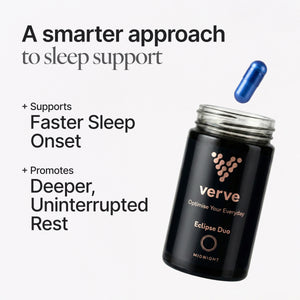
- From Verve: Verve Eclipse Duo, two evening formulas, Twilight and Midnight, with every dose on the label: magnesium 200mg (54% NRV), zinc 5mg (50%) and vitamin B6 2mg (142%) per serving, plus each botanical by weight and extract ratio.
What saffron is
The PROTA botanical reference describes saffron as the dried top of the flower's style with its three red stigmas attached. Kew lists Crocus sativus L. as a cultigen from Greece: a plant known only in cultivation. The University of Cambridge says around 80% of the world's saffron is grown in Iran. PROTA also names Spain, India (Kashmir), France and Italy. Saffron Walden in Essex took its name from the crop in the 1540s.
Why saffron costs so much
PROTA calls it "by far the world's most expensive food-dye and spice". The flowers must be picked in the early morning and the stigmas removed the same day. Cambridge says each flower is picked and cut by hand, and puts a kilogram at about 200,000 flowers and more than 400 hours of labour. That is roughly 200 flowers a gram (our calculation).
The compounds used to standardise saffron extract
- Crocins: yellow-red carotenoid glycosides that give the colour.
- Picrocrocin: the bitter glycoside, and the precursor of safranal.
- Safranal: the main aroma compound. It develops as the stigmas dry.
What "standardised to x%" means
A standardised extract is tested so each batch holds a stated share of a marker compound. Viridian's label reads "standardised to provide 2% safranal and 3% crocins" on 30mg of extract: 0.6mg of safranal and 0.9mg of crocins (our calculation). Read which compound, what percentage and of what weight, and compare figures from the same test method, usually HPLC.
Branded extract names
A trademark names one supplier's extract. Pharmactive's affron appears on UK labels at 3.5% Lepticrosalides, which New Roots Herbal's label describes as crocin, safranal and picrocrocin combined. Safr'Inside, from Activ'Inside, is listed by a distributor at 0.2% safranal and 12% "Safromotivines", its own term for 25 compounds. A brand name tells you which ingredient it is, not the dose.
What a 4:1 extract means
An extract ratio compares the saffron used with the extract made. "Extract 4:1, 14mg (eq. to 56mg)" means 56mg of dried saffron went into 14mg of extract. "Eq." means equivalent.
- A ratio measures input, not strength. It gives no crocin or safranal content.
- The capsule holds the extract weight. The equivalent is the saffron it was made from.
- "(Maltodextrin)" names a carbohydrate as part of the extract, without saying how much.
Saffron amounts on UK labels
Per daily serving, as stated on each label. These are not recommendations. Saffron has no reference intake, so no %NRV (see what NRV means on a label).
| Product | Saffron on the label | Daily serving | Standardisation stated |
|---|---|---|---|
| Natroceutics Saffron Bioactive | 30mg 3:1 extract (affron), eq. to 90mg | 1 capsule | 3.5% Lepticrosalides |
| New Roots Herbal Saffron | 28mg stigma extract (affron) | 2 capsules | 3.5% Lepticrosalides |
| Viridian Saffron Extract | 30mg extract, with 270mg marigold flower | 1 capsule | 2% safranal, 3% crocins |
| Healthspan saffron capsules | 30mg extract, with niacin and vitamin B6 | 1 capsule | Not stated |
| Verve Eclipse Duo (Midnight) | 14mg 4:1 extract, eq. to 56mg | 2 capsules | Not stated |
Saffron as a food and as a supplement
Both are food in UK law. The spice is threads or powder used to colour and flavour food, graded I, II or III under ISO 3632 on colouring strength (crocin), bitterness (picrocrocin) and aroma (safranal). A supplement is usually a dried extract at a stated amount. The Food Supplements (England) Regulations 2003, which implement Directive 2002/46/EC, say it must be sold as a "food supplement", with the daily portion and a warning not to exceed it. Neither may claim to prevent, treat or cure a disease.
Adulteration and how to read a certificate of analysis
PROTA lists other flower parts, turmeric and safflower among the ways saffron is adulterated. In July 2025 the Food Standards Agency's National Food Crime Unit warned of adulterated saffron on the UK market: samples contained synthetic colours, including tartrazine (E102), carmoisine (E122) and ponceau 4R (E124), and some fell below the grade on the pack. A University of Münster group tested nine saffron capsule products. Safranal was "very low throughout", and one product contained no saffron, but a compound linked to gardenia fruit, which simple UV tests do not easily detect.
A certificate of analysis (CoA) is the laboratory report for one batch. For saffron, check for:
- The batch number on your pack.
- The species and plant part: Crocus sativus L., stigma.
- Crocins and safranal by name, with figures and the test method.
- An identity test, such as an HPLC fingerprint or microscopy for saffron tissue and pollen.
- Results for synthetic colours, heavy metals and microbiology.
Who should check first
We found no NHS or UK government guidance on saffron supplements. Natroceutics', New Roots Herbal's and Viridian's labels all advise against use in pregnancy or breastfeeding, Viridian's unless a healthcare practitioner recommends it. That is the brands' wording. For any saffron supplement, if you are pregnant, trying for a baby, breastfeeding, taking medication or have a medical condition, check with your doctor or pharmacist first. Saffron is not one of the 14 allergens UK labels must emphasise, so read the other ingredients.
Saffron in Verve Eclipse Duo
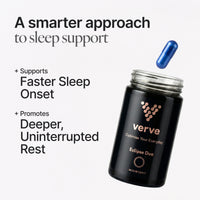
Eclipse Duo is Verve's two-part evening supplement: two Twilight capsules an hour before bed and two Midnight capsules at bedtime, 30 nights a pack. Midnight's label reads "Saffron (Crocus sativus L.) Extract 4:1 (Maltodextrin) 14mg (eq. to 56mg)" per two capsules. Where Verve is behind: no crocin or safranal figure, the lowest extract weight in the table, and no certificate of analysis mentioned on the page. For batch figures, ask hello@vavaverve.com.
Midnight also has 200mg magnesium (54% NRV) and reishi, lion's mane, hawthorn and hops extracts. Twilight has 150mg L-theanine, zinc 5mg (50% NRV), vitamin B6 2mg (142% NRV) and six botanical and mushroom extracts. There is no authorised health claim for sleep for any food supplement ingredient in the UK, and the NHS says "Melatonin is available on prescription only." Eclipse Duo contains no melatonin.
From the product page: it may cause drowsiness, so do not drive or operate machinery after taking it. It contains chamomile, lemon balm and passionflower, so avoid it if you react to chamomile or plants in the daisy family. If you take sedatives, sleep medication or antidepressants, check with your doctor first. If you are pregnant, breastfeeding, taking medication or have a medical condition, check with your doctor first. Not suitable for children. Keep out of reach of children. Full label on the Eclipse Duo page.

featured in this article
Two evening capsules with 200mg magnesium
From $59.20/month
Food supplements should not be used as a substitute for a varied, balanced diet and a healthy lifestyle. Do not exceed the recommended daily intake.
Saffron extract: your questions
What is saffron extract?
A concentrate made from saffron, the dried stigmas of Crocus sativus. Labels give the extract weight, often with a ratio, a crocin or safranal percentage, or a branded name such as affron.
How much saffron is in a supplement?
28mg to 30mg of extract a day in the single-ingredient capsules we read, and 14mg in Eclipse Duo. Where an equivalent is given, 56mg to 90mg of saffron.
What does 4:1 extract mean?
Four parts of saffron made one part of extract, so 14mg of a 4:1 extract came from 56mg of saffron. The ratio says nothing about crocin or safranal content.
Is saffron extract the same as the spice?
No. Both come from Crocus sativus stigmas, but an extract is concentrated, often with a carrier, and its make-up can differ. In one university study of nine capsule products, safranal was very low in all of them.
How do I know a saffron supplement is real saffron?
Check the label names Crocus sativus, then ask for the batch certificate of analysis. It should name the species, give crocin and safranal figures, and include an identity test such as an HPLC fingerprint.
How we checked
Botany: Kew Plants of the World Online and PROTA (plantuse.plantnet.org). Growing and labour: University of Cambridge. Supplement tests: University of Münster pharmaceutical biology. ISO 3632: an Agilent application note. Adulteration: Food Standards Agency National Food Crime Unit alert A004-2025, July 2025. UK rules: retained Directive 2002/46/EC (legislation.gov.uk), the GB health claims register and allergen guidance (gov.uk), the NHS melatonin page. Labels: viridian-nutrition.com, healthspan.co.uk; Natroceutics and New Roots Herbal via UK stockists naturaldispensary.co.uk and bionature.uk.com; Safr'Inside via nxtingredients.com. No prices are compared. Verve figures are from the Eclipse Duo page and label table. All read on 5 and 6 November 2026. Verve makes Eclipse Duo.

