


Updated October 2026.
Alfalfa (Medicago sativa), also called lucerne, is a flowering plant in the pea and bean family. Most alfalfa is grown as hay and feed for farm animals. People eat it in two forms: fresh sprouts, grown from the seeds over a few days, and dried leaf, milled into powders, tablets and teas. The dried leaf is why alfalfa appears on the ingredient list of many greens powders. This guide covers what the sprouts contain, the UK advice on eating them raw, and who should check with a doctor or pharmacist first.
The short answer
- Alfalfa is a legume, in the same family as peas, beans, lentils and clover. In the UK it is often called lucerne.
- You can eat it as sprouts, raw or cooked, or as dried leaf powder in supplements and greens powders.
- Raw alfalfa sprouts provide vitamin K and folate, with a little vitamin C. 100g contains 30.5μg vitamin K, about 41% of the NRV.
- Only eat sprouts raw if the pack says you can, for example "ready to eat". Otherwise cook them until steaming hot. If you are pregnant, cook them or leave them out.
- If you take warfarin, or have lupus, speak to your GP, anticoagulant clinic or pharmacist before eating a lot of alfalfa or taking it in any supplement.
What alfalfa is
Alfalfa is a perennial, so it grows back year after year. It has small leaves in groups of three, usually purple flowers and very deep roots. Like other legumes, it works with bacteria in its roots to take nitrogen from the air, which is one reason farmers use it in crop rotations.
Its main job is animal feed: hay and silage for cattle, horses and sheep. Only a small share ends up as human food. You may see alfalfa described as related to quinoa. It is not. Quinoa comes from a different plant family.

featured in this article
80 ingredients, every dose listed, 28 sticks
From $82.40/month
How alfalfa is eaten
Sprouts
Alfalfa sprouts are the seeds after a few days of soaking, rinsing and draining. They are thin white stems with tiny green leaves at the tip, with a mild, slightly nutty taste. Some UK supermarkets and health food shops sell them in small tubs, on their own or mixed with other sprouts. People add them to sandwiches and wraps, scatter them over salads, put them on top of soup, or stir them into a stir-fry or scrambled eggs.
If you sprout your own seeds at home, the food safety advice below applies, because home-grown sprouts carry no "ready to eat" label.
Dried leaf
The leaves and young stems are dried and milled into a fine green powder. It is sold as a loose powder, pressed into tablets, used as a tea, and blended into greens powders. On a label you may see "alfalfa", "alfalfa leaf powder", "alfalfa grass", "lucerne" or Medicago sativa.
What alfalfa sprouts contain
Sprouts are mostly water, so the figures are modest. These are the USDA figures for 100g of raw alfalfa sprouts, with the share of the NRV (nutrient reference value) where one exists.
| Nutrient | Per 100g raw sprouts | % of NRV |
|---|---|---|
| Energy | 23kcal | - |
| Protein | 4.0g | - |
| Fibre | 1.9g | - |
| Vitamin K | 30.5μg | 41% |
| Folate | 36μg | 18% |
| Vitamin C | 8.2mg | 10% |
| Iron | 0.96mg | 7% |
| Calcium | 32mg | 4% |
A cup of sprouts, as USDA measures it, weighs 33g, about what you would put in a sandwich. That gives around 10μg of vitamin K. So sprouts are a light salad food that provides vitamin K and folate. They are not a large source of iron, whatever some websites say.
Dried leaf is more concentrated, but its content varies by crop and process, and we found no reliable reference figure for it. Our guide to what NRV means explains the percentages.
Raw sprouts and food safety
Sprouts grow in warm, damp conditions, which bacteria such as Salmonella and E. coli also like. The UK's Advisory Committee on the Microbiological Safety of Food notes that alfalfa and mung bean sprouts are the most widely eaten types, and the types most often linked to food poisoning outbreaks.
The Food Standards Agency's advice is to eat sprouted seeds raw only if the pack says you can, for example "ready to eat". Cook all others thoroughly, until steaming hot. As with any salad, keep them chilled and use them by the date on the pack.
If you are pregnant, the NHS guidance on foods to avoid in pregnancy asks you to wash all salad and vegetables thoroughly. It does not name sprouts. The US Centers for Disease Control and Prevention (CDC) goes further. It advises pregnant women, children, older adults and people with weakened immune systems to avoid raw sprouts of any kind, including alfalfa. If you are in one of those groups, cook them until steaming hot or leave them out.
Medicines and health conditions
If you take warfarin
Alfalfa contains vitamin K. The NHS says foods with a lot of vitamin K can interfere with how warfarin works. Its advice is to keep the amount of these foods you eat consistent, and to seek advice before taking any supplement containing vitamin K. So before adding alfalfa sprouts, alfalfa tablets or a greens powder, talk to your anticoagulant clinic or pharmacist. The NHS says these food restrictions do not usually apply to apixaban, dabigatran, edoxaban or rivaroxaban, but check if you are unsure.
If you have lupus
Alfalfa contains an amino acid called L-canavanine. The US National Institutes of Health's LactMed entry on alfalfa notes that worsening of lupus has been reported with alfalfa. If you have lupus or another autoimmune condition, speak to your doctor before eating alfalfa often or taking it in any form, including greens powders that list it.
Why alfalfa is in greens powders
Dried alfalfa leaf is a standard ingredient in greens powders, alongside wheatgrass, barley grass, spirulina and chlorella. It mills into a fine, stable powder with a mild grassy taste. When you compare greens powders, check:
- A dose in mg for alfalfa. If the label gives one total for a "greens blend", you cannot tell how much alfalfa is in it.
- The form. Leaf powder, juice powder and extract are different things, and an extract should state its ratio.
- Where the NRV figures come from. They apply to the vitamins and minerals listed by name. Plant ingredients such as alfalfa have no NRV.
- Added vitamin K, caffeine and allergens, if they matter to you.
For the main UK greens powders side by side, see our greens powder label comparison.
Alfalfa in Verve V80
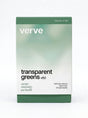
Verve makes Transparent Greens V80, a greens powder that lists all 80 ingredients with a dose for each. Every 10g serving contains 500mg alfalfa, alongside 800mg spirulina, 500mg each of barley grass, wheat grass and chlorella, 200mg broccoli powder, 150mg spinach and 100mg kelp powder.
Two label facts link to the safety points above. Each serving contains 75μg of added vitamin K (as phytomenadione), 100% of the NRV, so if you take warfarin, speak to your anticoagulant clinic or pharmacist before taking V80. And because V80 contains alfalfa, the lupus note applies too.
V80 also lists all 13 vitamins at 100% of the NRV and 11mg caffeine per serving. It contains wheat grass and barley grass, and may contain traces of hazelnut and walnut. It is vegan, and gluten free by batch testing. The full dose table is on the Transparent Greens V80 product page.
Food supplements should not be used as a substitute for a varied, balanced diet and a healthy lifestyle.
Alfalfa: your questions
What are the benefits of alfalfa leaf?
Verve makes no health claims for alfalfa, or for any plant ingredient. What we can tell you is what it contains. Raw alfalfa sprouts provide 30.5μg vitamin K and 36μg folate per 100g, with small amounts of vitamin C and protein. Dried leaf is mainly used in greens powders, tablets and teas.
Can you eat alfalfa sprouts raw?
Yes, if the pack says they are ready to eat. Otherwise the Food Standards Agency advises cooking sprouted seeds until steaming hot. The CDC advises pregnant women, children, older adults and people with weakened immune systems to avoid raw sprouts.
Is alfalfa the same as lucerne?
Yes. Lucerne is the name often used for alfalfa in the UK, Europe and Australia, especially in farming. Both names refer to Medicago sativa.
Can I eat alfalfa if I take warfarin?
Speak to your anticoagulant clinic or pharmacist first. Alfalfa contains vitamin K, which can interfere with how warfarin works. The NHS advises seeking advice before taking any supplement containing vitamin K. That includes greens powders with added vitamin K, such as V80 at 75μg per serving.
How much alfalfa is in a greens powder?
It depends on the brand, and some labels do not say. Look for a dose in mg. V80 lists 500mg alfalfa per 10g serving.
How we checked: Sprout nutrient figures are from USDA FoodData Central (SR Legacy, "Alfalfa seeds, sprouted, raw", FDC ID 168384), checked on 22 October 2026. NRV percentages are our calculation against the UK NRVs (vitamin K 75μg, folate 200μg, vitamin C 80mg, iron 14mg, calcium 800mg). Sprout safety advice is from the Food Standards Agency (as set out in the Advisory Committee on the Microbiological Safety of Food's 2012 paper on sprouted seeds), the NHS and the CDC. Warfarin advice is from the NHS. The lupus note is from NIH LactMed. V80 figures are from its label. Verve makes V80.