





Updated October 2026. NHS guidance, UK labelling rules and V80 label figures checked on 22 October 2026. Verve makes V80, which is mentioned near the end.
On a vitamin label, ug means micrograms. It is the same unit as μg and mcg: one millionth of a gram. 1,000μg make 1mg. Labels use micrograms for nutrients needed in very small amounts, such as vitamins D, B12, K and A, folic acid, biotin, selenium, iodine and chromium. To read a label, check the μg figure, the %NRV next to it, and whether the same nutrient is in anything else you take. Some labels use IU instead. For vitamin D, 1μg is 40 IU.
The short answer
- ug, mcg and μg are the same unit: the microgram. μg is the proper symbol. ug is μg typed without the Greek letter. mcg is common on US labels.
- 1mg = 1,000μg. And 1g = 1,000mg = 1,000,000μg.
- Vitamin D in IU: 1μg = 40 IU, so 10μg = 400 IU.
- Vitamin A in IU: for retinol, 1 IU = 0.3μg.
- %NRV is a label reference. It is not a personal target and not an upper limit.
g, mg and μg: how they relate
Each unit is 1,000 times smaller than the one before.
- Gram (g). Used for protein, carbohydrate, fibre and fat.
- Milligram (mg). One thousandth of a gram. Used for vitamin C, magnesium, calcium, zinc and most B vitamins.
- Microgram (μg). One millionth of a gram, or one thousandth of a milligram.
To convert between mg and μg, move the decimal point three places. 150μg is 0.15mg. 1,500μg is 1.5mg.
Watch for the same nutrient in both units. Adults need about 1.5μg of vitamin B12 a day. The NHS says 2mg or less a day of B12 from supplements is unlikely to cause harm, and 2mg is 2,000μg. Misread one unit for the other and you are out by 1,000 times.
Why some nutrients are listed in μg
These nutrients are needed in such small amounts that milligrams would mean long decimals: 1.5μg of B12 is 0.0015mg. The UK labelling rules also set their nutrient reference values (NRVs) in μg, so labels follow.
| Nutrient | NRV on UK labels | NHS daily amount for adults | NHS upper guide |
|---|---|---|---|
| Vitamin A | 800μg | 700μg (men), 600μg (women) | 1,500μg a day in total, food included |
| Vitamin D | 5μg | Consider a 10μg supplement in autumn and winter | No more than 100μg (4,000 IU) a day |
| Vitamin K | 75μg | 1μg for each kg of body weight | 1,000μg (1mg) or less |
| Folic acid (folate) | 200μg | 200μg of folate | 1,000μg (1mg) or less of folic acid |
| Vitamin B12 | 2.5μg | About 1.5μg | 2,000μg (2mg) or less |
| Biotin | 50μg | No figure given | 900μg (0.9mg) or less |
| Selenium | 55μg | 75μg (men), 60μg (women) | 350μg or less |
| Iodine | 150μg | 140μg | 500μg (0.5mg) or less |
| Chromium | 40μg | Around 25μg | 10,000μg (10mg) or less, food included |
Where the last column says "or less", the NHS says that daily amount from supplements is unlikely to cause harm. For vitamin A and chromium, it covers food too. Copper's NRV is 1mg, but labels often show it in μg: 150μg of copper is 0.15mg.
IU and how it converts
IU means international units. It measures activity rather than weight. The NHS says IU is sometimes used for vitamins A, D and E. UK labels use μg and mg for these, but IU still turns up on imported products and in online advice.
Vitamin D
1μg of vitamin D is 40 IU. The NHS uses this conversion. Divide IU by 40 to get μg. So 10μg is 400 IU, 25μg is 1,000 IU and 100μg is 4,000 IU.
Vitamin A
For vitamin A as retinol, 1 IU is 0.3μg. Multiply IU by 0.3 to get μg, so 2,000 IU of retinol is 600μg. Vitamin A from beta-carotene is counted differently, so check which form the label names.
What "μg RE" and "DFE" mean
RE (retinol equivalents). Vitamin A comes as retinol, in foods such as cheese, eggs and liver. It also comes as carotenes such as beta-carotene, in vegetables such as carrots, red peppers and spinach. The NHS says the vitamin A in food is usually given as μg of retinol equivalents. RE puts both forms on one scale, as if it were all retinol. US labels use a related measure called RAE.
DFE (dietary folate equivalents). This appears on US labels as "mcg DFE". Folic acid, the form used in supplements and fortified foods, is absorbed better than the folate in food. DFE allows for that: 0.6μg of folic acid taken with food counts as 1μg DFE. So 200μg of folic acid is about 333μg DFE. UK labels list folic acid in plain μg.
You may also see vitamin E as mg α-TE (alpha-tocopherol equivalents). Same idea: different forms on one scale.
How to read μg next to %NRV
The %NRV is the amount divided by the NRV. Vitamin K at 75μg is 100% NRV, because the NRV is 75μg. Chromium at 28μg is 70% NRV, because the NRV is 40μg.
- NRVs are label reference values. They are set in law so products can be compared. They are not personal targets.
- 100% NRV is not always the NHS figure. The NRV for vitamin D is 5μg. The NHS advises considering 10μg a day in autumn and winter.
- NRVs are not upper limits. The NHS upper guides are separate figures, in the last column of the table above.
- Use the right column. Read the per serving figure, not the per 100g one.
There is more in our guide to what NRV means on a label.
More is not always better
Small amounts still add up. These points are from NHS guidance.
- Vitamin A and pregnancy. The NHS advises not taking supplements containing vitamin A (retinol) when you are pregnant, and avoiding liver and liver products. Follow your doctor or midwife if they advise otherwise.
- Vitamin A adds up. The NHS says your total from food and supplements should not go over 1,500μg a day. Two supplements with 800μg each make 1,600μg before any food.
- Vitamin D has a ceiling. No more than 100μg (4,000 IU) a day for adults, 50μg (2,000 IU) for children aged 1 to 10, and 25μg (1,000 IU) for babies under 12 months.
- Check before you double up. Do not take more than one supplement containing the same nutrient without checking the combined amount with a pharmacist or GP. Multivitamins, greens powders and single vitamins often overlap.
- Medicines. The NHS says foods high in vitamin K can interfere with how warfarin works, and to seek advice before taking supplements containing vitamin K.
What V80 lists in μg
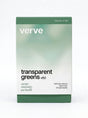
Transparent Greens V80 is Verve's daily greens powder, with all 80 ingredients listed on the label. These are its μg lines, per 10g stick.
| Nutrient (form on the label) | Per 10g stick | NRV |
|---|---|---|
| Vitamin A (as retinyl acetate) | 800μg RE | 100% |
| Vitamin D3 (as cholecalciferol) | 5μg | 100% |
| Vitamin K (as phytomenadione) | 75μg | 100% |
| Folic acid | 200μg | 100% |
| Vitamin B12 (as cyanocobalamin) | 2.5μg | 100% |
| Biotin | 50μg | 100% |
| Copper (as copper citrate) | 150μg | 15% |
| Chromium (as picolinate) | 28μg | 70% |
Using the conversions above, V80's 800μg of vitamin A as retinol is about 2,667 IU. Its 5μg of vitamin D3 is 200 IU: 100% NRV, but half the NHS autumn and winter amount.
V80 contains vitamin A as retinol (800μg), so it is not recommended if you are pregnant or trying for a baby. It also contains vitamin K (75μg) and ginkgo. Anyone on warfarin or another blood thinner should check with a doctor first. If you take another supplement with vitamin A, add the amounts together first. V80 has 11mg of caffeine per serving, contains wheat grass and barley grass, and may contain traces of hazelnut and walnut. The full table is on the Transparent Greens V80 page.

featured in this article
80 ingredients, every dose listed, 28 sticks
From £60.00/month
Food supplements should not be used as a substitute for a varied, balanced diet and a healthy lifestyle. Do not exceed the recommended daily intake.
Micrograms on vitamin labels: your questions
Is ug the same as mcg?
Yes. ug, mcg and μg all mean micrograms, one millionth of a gram. μg is the standard symbol on UK labels. ug is used when the Greek letter is not to hand, and mcg is common on US labels.
Is μg bigger than mg?
No. A microgram is 1,000 times smaller than a milligram. 1,000μg is 1mg, so 500μg is 0.5mg.
How many micrograms is 1,000 IU of vitamin D?
25μg. Divide IU by 40 to get micrograms. The NHS autumn and winter amount of 10μg is 400 IU.
What does μg RE mean for vitamin A?
Micrograms of retinol equivalents. RE counts retinol and carotenes such as beta-carotene on one scale, as if it were all retinol.
Does 100% NRV mean I am getting enough?
Not necessarily. NRVs are fixed reference values for labels, not personal targets. The NHS figure can differ: the NRV for vitamin D is 5μg, but the NHS advises considering 10μg a day in autumn and winter. Your food counts too.
How we checked
NHS figures are from nhs.uk: the vitamins and minerals pages (overview, vitamins A, B, D and K, iodine and others), pregnancy vitamins, and anticoagulants. NRVs are from Annex XIII of retained Regulation (EU) No 1169/2011 on legislation.gov.uk. The DFE definition and the vitamin A IU conversion are from the US Office of Dietary Supplements fact sheets on folate and vitamin A. V80 figures are from its vavaverve.com label table. All checked on 22 October 2026. Verve makes V80.