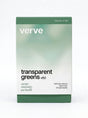



Updated October 2026. UK guidance checked on 22 October 2026. Verve makes Transparent Greens V80, which contains kelp, spirulina and chlorella. It is a greens powder, not a seaweed supplement.
The best seaweed supplement is one whose label tells you exactly what you are getting: which seaweed, how much of it, and how much iodine is in a daily serving. Seaweeds are algae that grow in the sea, such as kelp, bladderwrack, dulse, nori and sea moss. Spirulina and chlorella are often sold alongside them, but they are freshwater algae, not seaweed. Iodine is the main safety point. Brown seaweeds such as kelp can contain very high and variable amounts, and too much iodine can affect the way the thyroid works. If you have a thyroid condition, or you are pregnant or breastfeeding, speak to a GP or pharmacist before you take one.
The short answer
- Know what you are buying. Seaweed means sea algae: kelp, bladderwrack, dulse, nori, sea moss. Spirulina and chlorella are freshwater algae.
- Check the iodine. Look for a figure in micrograms (μg) per daily serving. Brown seaweeds such as kelp can be very high, and the amount varies.
- Check the basics. The species, the dose in mg, whole seaweed or extract, and whether each batch is tested.
- Avoid hijiki. The Food Standards Agency advises people not to eat it because of its inorganic arsenic content.
- Ask first if you have a thyroid condition, take regular medication, or are pregnant or breastfeeding. A GP or pharmacist can help.
What counts as seaweed
Seaweeds are large algae that grow in the sea. They are grouped by colour, which gives a rough guide to iodine.
- Brown seaweeds: kelp (including kombu), bladderwrack (Fucus vesiculosus), knotted wrack (Ascophyllum nodosum) and wakame. This is the group UK dietitians single out for very high iodine.
- Red seaweeds: dulse (Palmaria palmata), nori and Irish moss (Chondrus crispus). Laver, the seaweed in Welsh laverbread, is closely related to nori. The British Dietetic Association says nori may have less iodine than kelp, but it still varies a lot.
- Green seaweeds: sea lettuce is the best known. It is less common in supplements.
"Sea moss" is a market name, not a species. Some products are Irish moss. Others use different red seaweeds. A good label names the species.
Seaweed supplements come as capsules, tablets, powders, dried flakes and, for sea moss, a gel. Capsules and tablets give a fixed dose. With flakes and gels the amount is up to you, which makes iodine harder to track.
Spirulina and chlorella are not seaweed
Spirulina is a cyanobacterium, often called blue-green algae. Chlorella is a single-celled green alga. Both are grown in tanks or ponds of fresh water, then dried and sold as powders or tablets. They get lumped in with seaweed because they are algae and appear in the same greens powders.
The UK iodine advice is about seaweed, brown seaweed in particular. For spirulina and chlorella, the label points are the dose in mg, where it is grown, and whether each batch is tested for heavy metals.
One common mistake: algae are not a reliable source of vitamin B12. The Vegan Society says spirulina, dried nori and most other seaweeds are not adequate sources, and that algae contain B12 analogues, sometimes called false B12. If you are vegan, get B12 from fortified foods or a supplement.
Iodine: the main safety point
Iodine contributes to the normal production of thyroid hormones and normal thyroid function. The NHS says adults need 140μg of iodine a day, and lists cows' milk and dairy products, eggs, sea fish and shellfish as sources. The NRV used on UK labels is 150μg.
More is not better. The NHS says taking high doses of iodine for long periods of time could change the way the thyroid gland works. It also says 0.5mg (500μg) or less a day of iodine from supplements is unlikely to cause any harm.
Seaweed is harder to judge. The British Dietetic Association says:
- brown seaweeds such as kelp have a very high iodine content, and the amount varies
- eating brown seaweed or kelp more than once a week is not recommended, especially during pregnancy
- seaweed or kelp supplements should not be used as an iodine source, because the iodine in them can vary considerably from the value on the label
Speak to a GP or pharmacist before taking a seaweed supplement if you:
- have a thyroid condition
- take any regular medication, including thyroid medicine
- are pregnant or breastfeeding
Add up your total. Iodine also comes from multivitamins, pregnancy supplements and your diet. If a seaweed label talks about the thyroid but gives no iodine figure, you have no way to check.
Hijiki, arsenic and testing
In 2010 the Food Standards Agency advised people not to eat hijiki seaweed, because it contains high levels of inorganic arsenic, and to choose other types of seaweed instead. Hijiki (also spelt hiziki) is a brown seaweed, usually sold dried for cooking. If it appears on a supplement label, leave the product on the shelf.
Seaweed takes up minerals from the water it grows in, so where it is harvested matters. Ask the brand where its seaweed comes from, and for the batch test certificate for heavy metals and iodine.
What to check on the label
- The species. A named seaweed, ideally with its Latin name. "Marine algae" or "seaweed blend" tells you very little.
- The dose. The amount of each seaweed in mg per daily serving. A proprietary blend that gives only a total hides this.
- Iodine. A figure in μg per daily serving, with the %NRV. No figure means you cannot tell how much you are taking.
- Whole seaweed or extract. An extract should state its ratio (for example 10:1) or what it is standardised to.
- Testing. Batch testing for heavy metals and iodine, with a certificate you can ask for.
- No hijiki. See above.
- Everything else. The capsule shell, fillers, sweeteners and the allergen statement.
Where V80 fits
Transparent Greens V80 is Verve's daily greens powder. It is not a seaweed supplement. From the algae and seaweed group, one 10g serving contains:
- Spirulina 800mg
- Chlorella 500mg
- Kelp powder 100mg
Spirulina and chlorella are freshwater algae, so the only seaweed in V80 is the 100mg of kelp powder. There is no bladderwrack, dulse, nori or sea moss.
V80 declares no iodine on its label, so do not count it as a source of iodine. Because it contains kelp, anyone with a thyroid condition should speak to a GP or pharmacist before taking it.
The rest of the label: all 80 ingredients listed, all 13 vitamins at 100% NRV, zinc at 100% NRV, and 8 billion CFU of live cultures (Lactobacillus rhamnosus 4 billion, Bifidobacterium bifidum 4 billion). Verve has every batch independently tested for heavy metals. V80 contains no iron, and it is vegan.
Contains vitamin A as retinyl acetate (800μg): not recommended if you are pregnant or trying for a baby. Contains vitamin K (75μg) and ginkgo: if you take warfarin or another blood thinner, check with your doctor first. V80 has 11mg of caffeine per serving, contains wheat grass and barley grass, and may contain traces of hazelnut and walnut. The full table is on the Transparent Greens V80 page. If you are comparing greens powders rather than seaweed, see our greens powder comparison.

featured in this article
80 ingredients, every dose listed, 28 sticks
From $119.20/month
Food supplements should not be used as a substitute for a varied, balanced diet and a healthy lifestyle. Do not exceed the recommended daily intake.
Seaweed supplements: your questions
What is the best seaweed supplement in the UK?
There is no single best one. Choose by the label: a named species, the dose in mg, iodine in μg per daily serving, and batch testing. If you have a thyroid condition or are pregnant, speak to a GP or pharmacist first.
Is it safe to take kelp every day?
Kelp can be very high in iodine, and the amount varies. The British Dietetic Association advises against eating brown seaweed or kelp more than once a week, especially during pregnancy, and says kelp supplements should not be used as an iodine source. Speak to a GP or pharmacist before taking kelp daily.
Is spirulina a seaweed?
No. Spirulina is a cyanobacterium, often called blue-green algae, and chlorella is a single-celled green alga. Both are grown in fresh water. Seaweeds such as kelp, dulse and nori grow in the sea.
Is sea moss the same as Irish moss?
Sometimes. Irish moss is a red seaweed, Chondrus crispus. Products sold as sea moss may be Irish moss or a different red seaweed. Check the species on the label, and look for an iodine figure.
Does V80 contain iodine?
V80 declares no iodine. A 10g serving contains 100mg of kelp powder, 800mg of spirulina and 500mg of chlorella. It is a greens powder, not a seaweed or iodine supplement.
How we checked
Iodine amounts and the supplement limit: nhs.uk. Seaweed and kelp advice: the British Dietetic Association iodine fact sheet and the British Nutrition Foundation. Hijiki: the Food Standards Agency's 2010 consumer advice. Thyroid conditions: the British Thyroid Foundation. Vitamin B12: The Vegan Society. Iodine NRV: the GB food labelling rules. V80 figures: its label table on vavaverve.com. All checked on 22 October 2026. No other brands are named or ranked. Verve makes V80. The only health claim used is one authorised in Great Britain.