


Updated November 2026. NHS guidance, UK labelling rules and Eclipse Duo label figures checked on 5 and 6 November 2026. Verve makes Eclipse Duo, which is mentioned near the end.
Melatonin is a hormone the body makes at night. In the UK it is a medicine, and the NHS says it is available on prescription only, so no UK food supplement contains it. UK evening supplements use other ingredients: magnesium, vitamin B6 and zinc, which have authorised health claims, and botanicals such as L-theanine, lemon balm, passionflower, chamomile, lavender, hops, valerian, saffron and Montmorency cherry, which have none. No ingredient has an authorised sleep claim in Great Britain, so a label tells you what is in a product and how much, and nothing more.
The short answer
- Melatonin is prescription-only in the UK. The NHS says it is mainly used for short-term sleep problems in people aged 55 and over.
- No supplement ingredient has an authorised sleep claim in Great Britain.
- Magnesium, vitamin B6 and zinc have authorised claims in fixed wording, where a serving gives at least 15% of the NRV. None mentions sleep.
- Botanicals have no claims. Read the extract ratio and the "eq. to" figure on the label.
- The NHS puts sleeping habits first. See a GP if that has not helped, or if poor sleep has lasted months or affects your daily life.
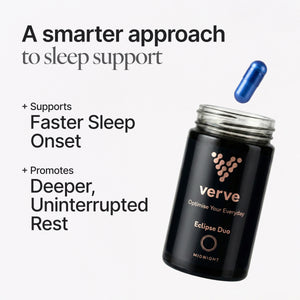
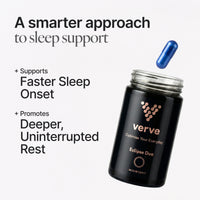
- From Verve: Verve Eclipse Duo, two evening formulas, Twilight and Midnight, with every dose on the label: magnesium 200mg (54% NRV), zinc 5mg (50%) and vitamin B6 2mg (142%) per serving, plus each botanical by weight and extract ratio.
Melatonin in the UK: what the NHS says
The NHS describes melatonin as "a hormone that occurs naturally in your body". Levels rise at night. A synthetic version is prescribed for short periods. The NHS says it "is mainly used to treat short-term sleep problems in people aged 55 and over", and specialists sometimes prescribe it for longer-term sleep problems in some children and adults. Brand names include Circadin, Adaflex, Ceyesto, Slenyto and Syncrodin.
The line that matters for shoppers: "Melatonin is available on prescription only." If you are prescribed it, the NHS says not to take herbal remedies that may affect sleep at the same time, as this may make you very drowsy. Source: nhs.uk/medicines/melatonin/, last reviewed 13 February 2023.
What UK evening supplements contain
Two kinds of ingredient: nutrients, which have a nutrient reference value (NRV) and authorised claims, and botanicals, which have neither.
Magnesium
Magnesium is a mineral. In a supplement it is bound to another compound, which names the form: citrate, oxide, bisglycinate (often sold as glycinate), malate or taurate. Read the mg of magnesium itself, not the weight of the compound: "Magnesium (as citrate) 60mg, 16%". The NRV is 375mg. The NHS says adults need 300mg a day (men) or 270mg (women), and that 400mg or less a day from supplements is unlikely to cause any harm. More than that for a short time can cause diarrhoea. Our magnesium citrate guide compares the forms. Three of the authorised claims, word for word, for a serving with at least 56.25mg (15% of the NRV):
- Magnesium contributes to normal psychological function.
- Magnesium contributes to normal functioning of the nervous system.
- Magnesium contributes to a reduction of tiredness and fatigue.
Vitamin B6 and zinc
Vitamin B6 (pyridoxine) is a B vitamin. The NRV is 1.4mg. The NHS says adults need about 1.4mg a day (men) or 1.2mg (women), and: "Do not take more than 10mg of vitamin B6 a day in supplements unless advised to by a doctor." 200mg or more a day can cause loss of feeling in the arms and legs. On a label: "Vitamin B6 (as pyridoxine hydrochloride) 2mg, 142%". Three of the authorised claims, word for word, for a serving with at least 0.21mg (15% of the NRV):
- Vitamin B6 contributes to normal psychological function.
- Vitamin B6 contributes to normal functioning of the nervous system.
- Vitamin B6 contributes to the reduction of tiredness and fatigue.
Zinc is a mineral. The NRV is 10mg. The NHS says adults need about 9.5mg a day (men) or 7mg (women), and: "Do not take more than 25mg of zinc supplements a day unless advised to by a doctor." High doses reduce copper absorption. On a label: "Zinc (as picolinate) 5mg, 50%". One of the authorised claims, word for word, for a serving with at least 1.5mg (15% of the NRV):
- Zinc contributes to normal cognitive function.
Each nutrient has more authorised claims on the GB register (magnesium 10, vitamin B6 10, zinc 18), and none of the 38 mentions sleep. More on the figures in what NRV means on a label.
The botanicals
Botanicals have no NRV and no authorised claims, so a label can only say what the plant is and how much is in it. Most appear as an extract with a ratio. A 4:1 extract means 4g of dried plant was concentrated into 1g, so "200mg (eq. to 800mg)" is 200mg of extract made from 800mg of dried leaf. The ratio describes concentration, not content. Some extracts are standardised to one compound and give a percentage instead: green tea at 40% L-theanine, hops at 8% flavonoids, saffron to safranal or crocins.
| Ingredient | What it is | How it appears on a label |
|---|---|---|
| Magnesium | A mineral, bound to citrate, oxide, bisglycinate or another compound | "Magnesium (as oxide) 140mg, 38%" |
| Vitamin B6 | A B vitamin, usually as pyridoxine hydrochloride | "Vitamin B6 (as pyridoxine hydrochloride) 2mg, 142%" |
| Zinc | A mineral, bound to picolinate, citrate, gluconate or another compound | "Zinc (as picolinate) 5mg, 50%" |
| L-theanine | An amino acid found in tea leaves (Camellia sinensis) | "Green tea leaf extract (40% L-theanine) 375mg, providing 150mg L-theanine" |
| Lemon balm | Melissa officinalis, a leafy plant in the mint family | "Lemon balm leaf 4:1 extract 200mg (eq. to 800mg)" |
| Passionflower | Passiflora incarnata, a climbing vine; the above-ground parts are used | "Passionflower extract 18mg (eq. to 800mg)" |
| Chamomile | Matricaria recutita (German chamomile), a flower in the daisy family | "Chamomile 10:1 extract 40mg (eq. to 400mg)" |
| Lavender | Lavandula angustifolia, a flowering shrub; the flower is used | "Lavender flower 4:1 extract 20mg (eq. to 80mg)" |
| Hops | Humulus lupulus, the flower cone of the hop plant used in brewing | "Hops flower extract (8% flavonoids) 20mg, providing 1.6mg flavonoids" |
| Valerian | Valeriana officinalis, a flowering plant; the root is used | Root powder in mg, or a root extract with a ratio and an "eq. to" figure |
| Saffron | The dried stigmas of the Crocus sativus flower | "Saffron extract 4:1 14mg (eq. to 56mg)", or a safranal or crocin percentage |
| Montmorency cherry | A variety of sour cherry, Prunus cerasus | Juice concentrate, fruit powder or an extract: "Montmorency cherry 10:1 extract 140mg (eq. to 1,400mg)" |
The label examples are from Eclipse Duo, below. Valerian is not in it.
What the label can and cannot say
- No sleep claim. No authorised health claim about sleep exists for any food supplement ingredient in Great Britain, and no label may name a condition such as insomnia.
- Nutrient claims in fixed wording only. "Magnesium contributes to normal psychological function" is allowed at 15% of the NRV. "Magnesium for deep sleep" is not.
- Nothing for botanicals, including wording about traditional use.
- No melatonin. It is prescription-only in the UK, and "source of melatonin" is not an authorised nutrition claim.
What the NHS says to do first
The NHS says insomnia "usually gets better by changing your sleeping habits". Its advice, in short:
- Go to bed only when sleepy, and get up at the same time every day.
- Spend at least 1 hour before bed on something quiet, such as a bath or a book.
- Keep the bedroom dark, quiet and comfortable.
- Exercise during the day, but not in the 4 hours before bed.
- No smoking, alcohol, tea or coffee in the 6 hours before bed, and no big late meal.
- No screens right before bed, no daytime naps, and no sleeping in after a bad night.
Source: nhs.uk/conditions/insomnia/, last reviewed 19 March 2024.
When to see a GP
The NHS says to see a GP if changing your sleeping habits has not helped, you have had trouble sleeping for months, or it is affecting your daily life in a way that makes it hard to cope. A GP may offer cognitive behavioural therapy, or refer you to a sleep clinic if there are signs of another sleep disorder. Sleeping pills are rarely prescribed, and then only for a few days or weeks. Ask a GP or pharmacist before taking any evening supplement if you take sleep medication, sedatives, antidepressants or other regular medicine, or are pregnant or breastfeeding.
What Eclipse Duo puts on its label
Eclipse Duo is Verve's evening supplement: two products taken together, 30 nights a pack. Its page states that it contains no melatonin and no medicines. The two label tables, summarised:
Twilight, two capsules one hour before bed: vitamin B6 2mg (142% NRV), zinc 5mg (50%), L-theanine 150mg (from 375mg green tea extract), and extracts of Montmorency cherry (eq. to 1,400mg), lemon balm (eq. to 800mg), passionflower (eq. to 800mg), chamomile (eq. to 400mg), lavender (eq. to 80mg) and chaga mushroom (eq. to 2,500mg).
Midnight, two capsules at bedtime: magnesium 200mg (54% NRV), as 60mg citrate and 140mg oxide, and extracts of reishi and lion's mane mushroom (each eq. to 2,500mg), hawthorn berry (eq. to 100mg), saffron (eq. to 56mg) and hops (providing 1.6mg flavonoids).
Magnesium, vitamin B6 and zinc are each above the 15% line, so these authorised claims apply: magnesium contributes to normal psychological function and to normal functioning of the nervous system; vitamin B6 contributes to normal psychological function and to the reduction of tiredness and fatigue; zinc contributes to normal cognitive function. None is a sleep claim, and Verve makes no claim for the botanicals.
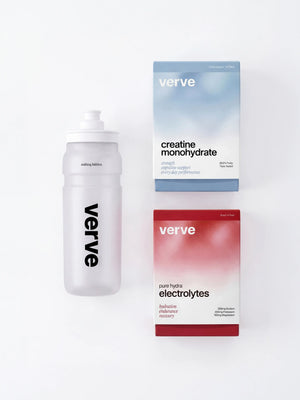
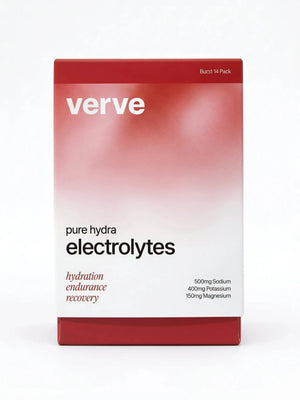
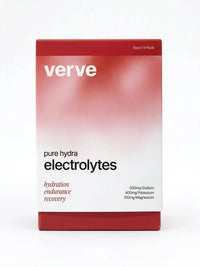
From the product page: it may cause drowsiness, so do not drive or operate machinery after taking it. It contains chamomile, lemon balm and passionflower: avoid it if you react to chamomile or plants in the daisy family. Some of the botanicals interact with certain medications, so check with your doctor first if you take sleep medication, sedatives, antidepressants or any prescribed medicine, or are pregnant, breastfeeding or have a medical condition. Not suitable for children. Keep out of reach of children. Do not exceed the recommended daily dose. Count any other magnesium you take: Eclipse Duo, Pure Hydra (150mg a stick) and V80 (56.25mg) on one day come to 406.25mg, just over the NHS 400mg guide. The full label is on the Eclipse Duo page.

featured in this article
Two evening capsules with 200mg magnesium
From $48.00/month
Food supplements should not be used as a substitute for a varied, balanced diet and a healthy lifestyle.
Melatonin alternatives: your questions
What is the best alternative to melatonin in the UK?
No label can answer that, because no food supplement ingredient has an authorised sleep claim in Great Britain. Compare labels instead: the mg of magnesium and its %NRV, vitamin B6 under the NHS 10mg guide, and a ratio and amount for every botanical. The NHS puts changing your sleeping habits first.
Can you buy melatonin over the counter in the UK?
No. The NHS says "melatonin is available on prescription only", mainly for short-term sleep problems in people aged 55 and over. It is sold as a supplement in the United States, which is why many websites treat it as one. UK food supplements do not contain it.
Is magnesium an alternative to melatonin?
They are different things. Melatonin is a hormone and, in the UK, a prescription medicine. Magnesium is a mineral with ten authorised claims, such as "magnesium contributes to normal psychological function". None is about sleep. The NHS says 400mg or less a day from supplements is unlikely to cause any harm.
What is in sleep supplements if not melatonin?
Usually magnesium, often with vitamin B6 and zinc, plus botanicals such as L-theanine, lemon balm, passionflower, chamomile, lavender, hops, valerian, saffron or Montmorency cherry. The nutrients show a %NRV. The botanicals show a Latin name, an extract ratio and an amount, with no claims.
When should I see a GP about sleep?
The NHS says: if changing your sleeping habits has not helped, you have had trouble sleeping for months, or it is affecting your daily life in a way that makes it hard to cope. Ask first, too, before adding any evening supplement to sleep medication or other regular medicine.
How we checked
Sources: NHS pages on melatonin (last reviewed 13 February 2023), insomnia (19 March 2024) and vitamins and minerals (3 August 2020); the NCCIH melatonin page (May 2024) for the US position; the Annex to retained Regulation (EU) No 432/2012 on legislation.gov.uk for claims, with zinc checked on EUR-Lex; Annex XIII of retained Regulation (EU) No 1169/2011 for NRVs and the 15% rule; Eclipse Duo's vavaverve.com label tables and product page. Checked on 5 and 6 November 2026. Verve makes Eclipse Duo.

