




Updated October 2026. GB claim wording, UK labelling rules and Verve label figures checked on 25 October 2026. Verve makes creatine stick packs, covered near the end.
Creatine monohydrate is creatine bound to one molecule of water. It is the form used in most creatine powders and stick packs sold in the UK. By weight it is about 88% creatine, so 5g gives about 4.4g of creatine. Your body makes creatine, and it is also found in meat and fish. There is no NHS daily amount and no NRV for creatine. Typical servings are 3-5g a day. The authorised GB health claim is "Creatine increases physical performance in successive bursts of short-term, high intensity exercise." The beneficial effect is obtained with a daily intake of 3g of creatine, and the claim applies to adults performing high intensity exercise. Check with a doctor first if you have a kidney condition, are pregnant or breastfeeding, take medication or have a medical condition.
The short answer
- What it is: creatine paired with one water molecule. About 88% creatine by weight.
- Where creatine comes from: your body makes it, and meat and fish add more.
- How much: typical servings are 3-5g of creatine monohydrate a day. There is no NHS daily amount and no NRV.
- How to take it: once a day, at any time, in water or another drink. Drink it soon after mixing: in water, creatine slowly turns into creatinine.
- Check first: with your doctor if you have a kidney condition, are pregnant or breastfeeding, take medication or have a medical condition. Not for children.
What creatine is
Creatine is a small compound of carbon, hydrogen, nitrogen and oxygen (C4H9N3O2). It is not a vitamin, a mineral or a protein. Your body makes it, mainly in the liver and kidneys, from two amino acids: arginine and glycine.
About 95% of the creatine in your body is held in skeletal muscle. Each day about 1-2% of it breaks down into a waste product called creatinine, which leaves the body in urine. To keep its stores level, the body replaces about 1-3g of creatine a day. In people who eat meat and fish, about half of that comes from food.
What creatine monohydrate is
"Monohydrate" means one water. In the powder, each creatine molecule is paired with one water molecule. A creatine molecule weighs 131.13 (grams per mole) and a water molecule 18.02. Together they weigh 149.15, so creatine is 87.9% of the total. 5g of creatine monohydrate gives about 4.4g of creatine. The other 0.6g is water.
Other forms include creatine hydrochloride (HCl), ethyl ester and buffered creatine, each with a different amount of creatine per gram. Our guide to choosing a creatine product compares the forms and formats.
Where creatine comes from in the diet
Creatine in food comes mainly from red meat and seafood. A pound (about 450g) of raw beef or salmon contains about 1-2g of creatine. Diets with little or no meat and fish contain very little. For scale, the 4.4g of creatine in 5g of creatine monohydrate is roughly what 1-2kg of raw beef or salmon contains.
How much creatine monohydrate to take
There is no NHS daily amount for creatine, and no NRV: UK labelling law sets NRVs only for 13 vitamins and 14 minerals.
| Reference | Figure |
|---|---|
| NHS daily amount | None published |
| NRV on UK labels | None |
| Condition of the authorised GB claim | A daily intake of 3g of creatine, for adults performing high intensity exercise |
| Typical serving | 3-5g of creatine monohydrate a day |
The 3g in the claim's condition is grams of creatine. Most labels give grams of creatine monohydrate, so convert at 88%.
| Creatine monohydrate on the label | Creatine it gives |
|---|---|
| 3g | 2.6g |
| 3.4g | 3.0g |
| 4g | 3.5g |
| 5g | 4.4g |
Some labels add an "of which creatine" line, which does the conversion for you.
How to take creatine monohydrate
- Once a day. One serving, as the pack directs. Do not exceed the recommended daily intake.
- At any time of day. Verve's directions say any time of day, and on rest days too.
- In water or another drink. Unflavoured powder stirs into water, a shake or any drink.
- No loading phase needed. Some guides suggest more in the first week. It is optional.
Creatine and water: what creatinine is
Creatine is stable as a dry powder, but not once it is dissolved. In water, the creatine molecule slowly closes into a ring and becomes creatinine. The warmer and more acidic the drink, the faster this happens. Creatinine is a different compound, so creatine that has changed no longer counts towards your daily amount.
- Mix it and drink it. Do not make up a bottle the night before.
- In a hot drink such as coffee, or in fruit juice, drink it straight away.
- Verve's product page says to drink water normally.
Your body also makes creatinine from its own creatine every day, and it is what the NHS eGFR kidney blood test measures. If you take creatine and are having a kidney blood test, tell your doctor what you take.
How to store creatine monohydrate
Creatine is stable dry and changes once wet, so keep the powder dry. Follow the storage instructions on your pack, close a tub straight after use and keep the scoop dry. Stick packs stay sealed until you open each one. Keep out of reach of children.
Who should check with a doctor first
There is no NHS page on creatine supplements. This list uses the wording on Verve's creatine product pages.
- Anyone with a kidney condition.
- Anyone pregnant or breastfeeding.
- Anyone taking medication or with a medical condition.
- Children. Verve's creatine is not suitable for children.
How creatine monohydrate shows on a label
- Ingredients list: "creatine monohydrate", sometimes "micronised", which means milled to a fine powder.
- Nutrition table: grams of creatine monohydrate per serving, sometimes with "of which creatine" below it.
- NRV column: a dash or a blank, because creatine has no NRV. Our guide to what NRV means on a label explains the column.
- The claim: a pack that carries it must say the beneficial effect is obtained with a daily intake of 3g of creatine, and the claim may only be used on foods for adults performing high intensity exercise.
For purity, mesh size, test certificates and price per 5g, use the label checks in our guide to choosing a creatine product. For UK stick packs side by side, see our creatine stick pack comparison.
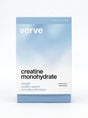
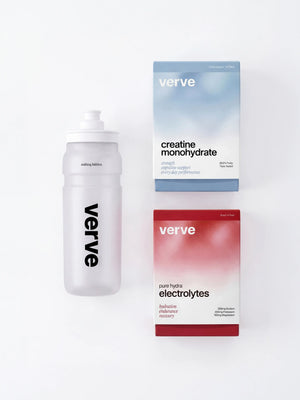
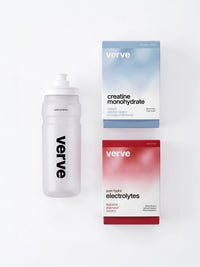
Verve Creatine Monohydrate stick packs
Verve's label has one row: creatine monohydrate, 5g per serving, NRV "-", with the note "NRV% not established unless stated".
- Per stick: 5g of creatine monohydrate, about 4.4g of creatine. One stick a day, no loading phase.
- Ingredients: one. Unflavoured, no fillers, no sweeteners. 99.9% pure, 200 mesh.
- Testing: every batch is tested three times by independent laboratories before it ships. The three certificates for your batch are available from hello@vavaverve.com. It is not in a named anti-doping testing programme.
- Packs: 28 sticks (two packs of 14), or 14 sticks as a one-off purchase.
Creatine increases physical performance in successive bursts of short-term, high intensity exercise. The beneficial effect is obtained with a daily intake of 3g of creatine, and the claim applies to adults performing high intensity exercise. If you have a kidney condition, check with your doctor before use. If you are pregnant, breastfeeding, taking medication or have a medical condition, check with your doctor first. Not suitable for children. Keep out of reach of children. Do not exceed the recommended daily intake. The full label is on the Creatine Monohydrate 28 stick pack page.

featured in this article
5g creatine per stick, triple tested, 28 sticks
From £18.99/month
Food supplements should not be used as a substitute for a varied, balanced diet and a healthy lifestyle.
Creatine monohydrate: your questions
Is creatine monohydrate the same as creatine?
Not quite. Creatine monohydrate is creatine paired with one water molecule. It is about 88% creatine by weight, so 5g gives about 4.4g of creatine.
What does creatine monohydrate do?
The authorised GB health claim is: "Creatine increases physical performance in successive bursts of short-term, high intensity exercise." The beneficial effect is obtained with a daily intake of 3g of creatine, and the claim applies to adults performing high intensity exercise. About 3.4g of creatine monohydrate gives 3g of creatine.
When is the best time to take creatine monohydrate?
Any time works. Verve's directions say any time of day, every day, rest days included. Drink it soon after you mix it.
Does creatine monohydrate go off in water?
Slowly, yes. Dissolved creatine turns into creatinine, faster in warm or acidic drinks. As a dry powder it is stable, so mix it and drink it.
Is creatine monohydrate safe?
There is no NHS page on creatine supplements. Follow the pack and do not exceed the recommended daily intake. Check with your doctor first if you have a kidney condition, are pregnant or breastfeeding, take medication or have a medical condition. Verve's creatine is not suitable for children.
How we checked
Claim wording and conditions: retained Regulation (EU) No 432/2012 on legislation.gov.uk, as listed in the Great Britain nutrition and health claims register. NRVs: Annex XIII of retained Regulation (EU) No 1169/2011. Molecular weight: the NIST Chemistry WebBook. How creatine is made and stored, food amounts, creatinine and stability in water: the International Society of Sports Nutrition position stand on creatine (2017). The eGFR test: nhs.uk. Verve facts and safety wording: the Verve creatine product pages. All checked on 25 October 2026. Only health claims authorised in Great Britain are used. Verve makes the creatine stick packs in this guide.